
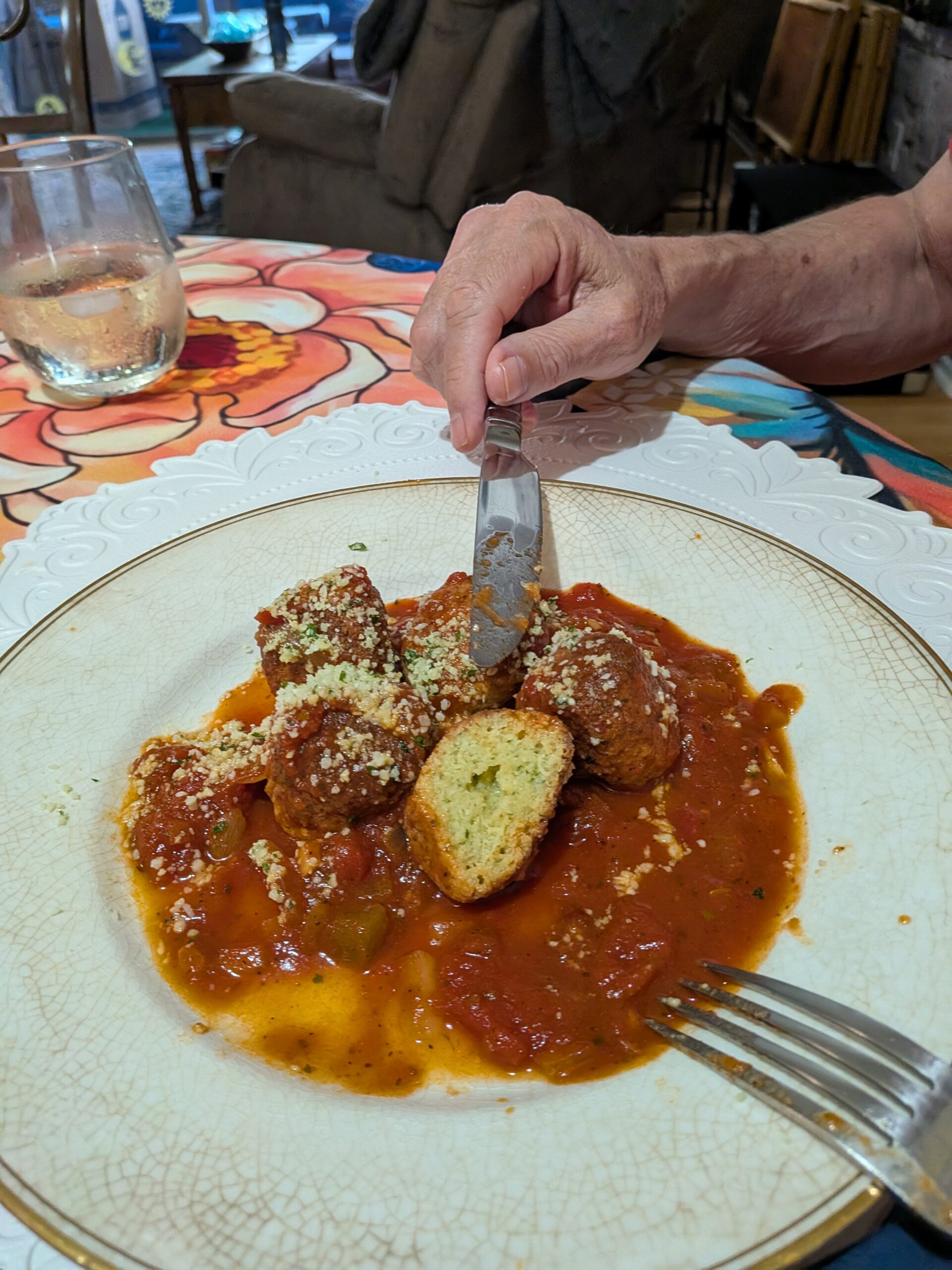

They originated in Southern Italy, especially in Puglia, Campania, Sicily, and Basilicata (such as the bread meatballs from Matera). They are a recycling dish born out of the need not to waste stale bread and to replace meat when it was a luxury or unavailable (for example during the war, in times of poverty, or during Lent). They are part of the poor man’s cuisine tradition (“poor man’s meatballs”). The soaked bread, eggs, and cheese (often pecorino or parmigiano, which are cheaper and more flavorful than bread alone) provided substance and taste without the need for meat. There is no precise date of “invention,” but they are lost in the mists of time of peasant tradition. They have been documented as family recipes for generations, especially in the 20th century, but are rooted in even older customs of bread recovery (similar to the “sciuscelle” or “pittule” in Salento, Puglia).
Serves 4
7 ounces (about 198g) stale Italian bread or rustic bread, crusts removed
8.5 ounces (about 241g) hard grated cheese, pecorino romano or parmigiano reggiano
1 clove of garlic, grated
3-5 large eggs, beaten (add beaten egg one at a time as it will depend on humidity, how stale, and type of bread)
¼ cup (about 12 grams) chopped fresh parsley
Salt and pepper to taste
Olive oil to saute
In a food processor, add bread and garlic until coarse crumbs are formed. Add cheese and parsley, salt and pepper and pulse 6-8 times or well incorporated. Remove the bread crumbs to a large bowl. Add eggs one at a time, mixing with a fork until moist but still able to form into fairly firm balls. Traditionally you would shape these into “egg” sized balls and poach them in a spice tomato sauce for about 15-20 minutes. We prefer to use a scoop and form walnut sized balls, and fry them in olive oil until golden. Once golden add them to simmering sauce for 10-20 minutes.
Serve with sauce and extra grated cheese.
Add Calabrian peppers or any spicy red pepper to your normal home made tomato sauce.
0 Comments