
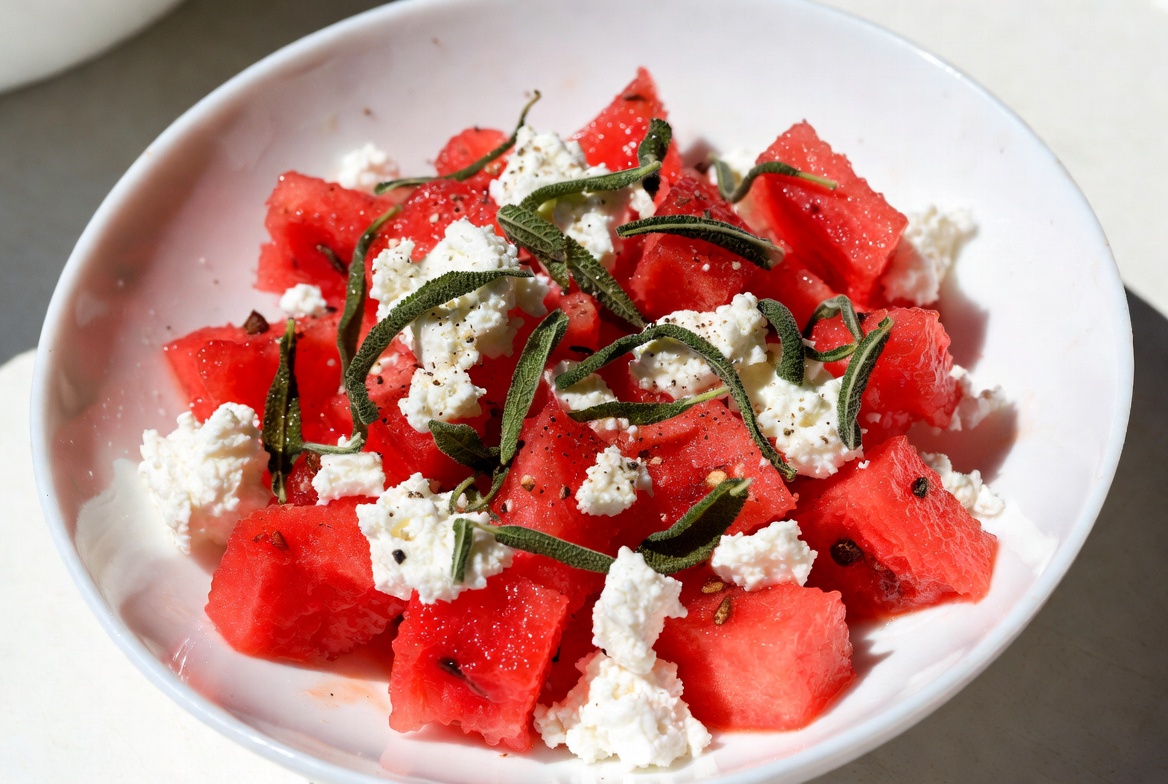

In a large bowl place watermelon, feta cheese, chopped sage and pepper. Toss gently to combine. Serve immediately.
Your ingredients and the benefits:
Sage is sharply flavored and slightly bitter herb in the family of Lamiaceae, of the genus: Salvia. Sage is in the same family as basil, mint and rosemary. It is found all over the Mediterranean. Sage herb parts have many notable plant-derived chemical compounds, essential oils, minerals, vitamins that are known to have disease prevention properties.
The primary biologically active component of common sage appears to be its essential oil, which chiefly contain ketones; A-thujone, and B-thujone along with cineol, borneol, tannic acid; bitter substances like cornsole and cornsolic acid; fumaric, chlorogenic, caffeic and nicotinic acids; nicotinamide; flavones; flavone glycosides and estrogenic substances. These compounds are known to have counter-irritant, rubefacient, anti-inflammatory, anti-allergic, anti-fungal and anti-septic properties.
Thujone is GABA and Serotonin (5-HT3) receptor antagonist. It enhances attention span and quickens the senses, and can help deal with grief and depression.
Fresh sage leaves are a good source of antioxidant vitamin, vitamin C; contain 32.4 or 54% of RDA. Vitamin C helps in the synthesis of structural proteins like collagen. Adequate levels in the body help maintain integrity of blood vessels, skin, organs, and bones. Regular consumption of foods rich in vitamin-C helps the body protect from scurvy; develop resistance against infectious agents (boosts immunity) and scavenge harmful, pro-inflammatory free radicals from the body.
Watermelon is a sweet tasting summer fruit. Every 100 grams of watermelon contains 30 calories, one g fiber, food, ten g sugar, one g protein, free fat and cholesterol, contains vitamins such as A, C, E, D, niacin, thiamine, B6, B12, acid Pantothenic. Also contains minerals such as iron, calcium, magnesium, manganese, potassium, phosphorus, zinc, fluoride, selenium. Watermelon is SODIUM FREE!
.
0 Comments